
1. The Question Every Parent Gets Wrong
Most parents searching “is my child ready for preschool” are looking for a checklist. They tick a few boxes, feel briefly reassured — and then start worrying all over again.
That is because they are asking the wrong question.
The real question is not: “Is my child fully ready?”
These are very different questions. The first has no satisfying answer, because “fully ready” is a myth. The second has a clear, practical answer — and this guide will help you find it.
2. The 7 Real Signs of Preschool Readiness
Readiness is not about perfection. It is about small signs that your child can begin adjusting to a warm, structured, play-based environment.
Sign 1 — They Can Separate from You, Even Briefly
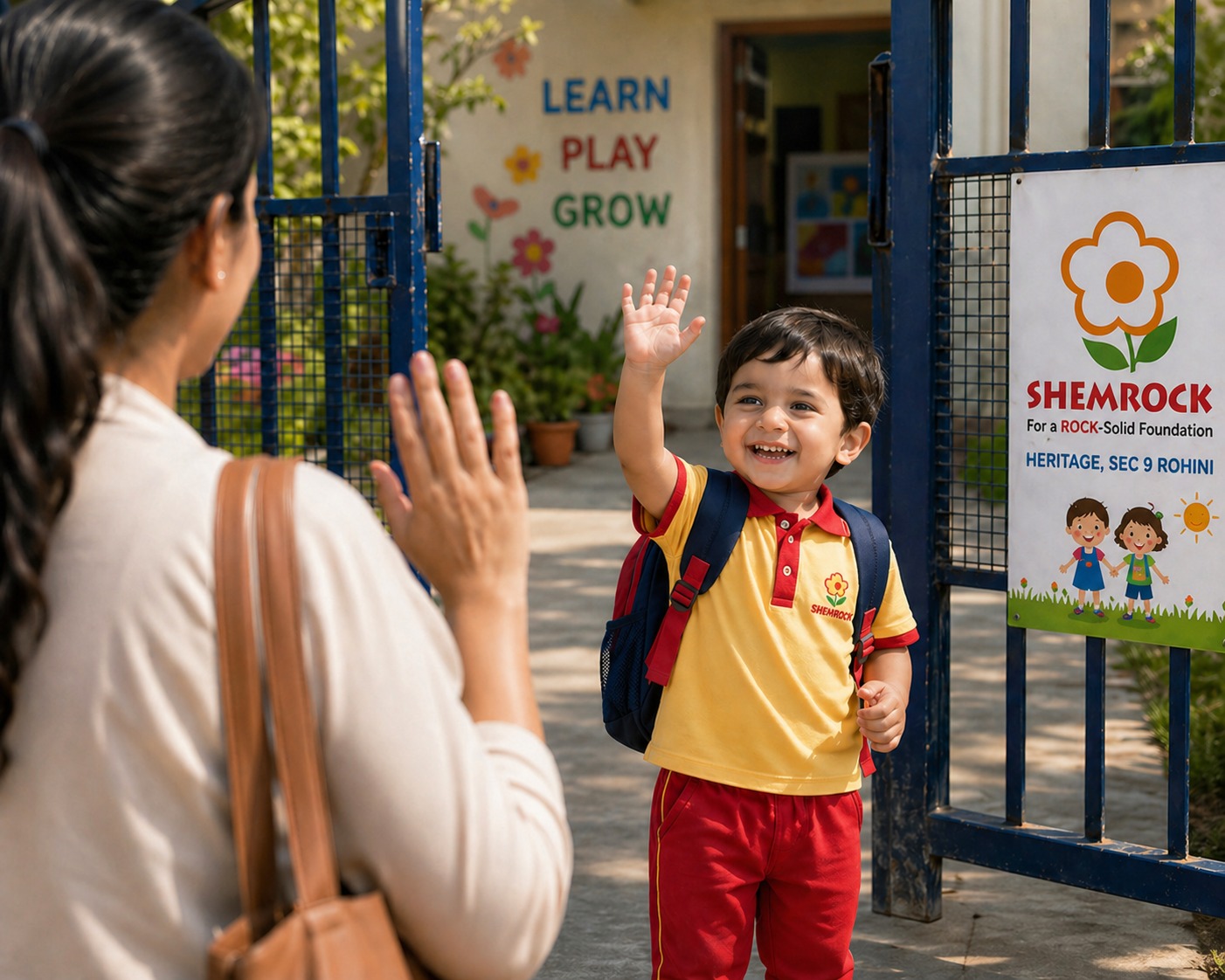
Many parents believe a child must walk into school happily on day one. That is not realistic. Most young children protest separation at first.
The real sign is simpler: after a short period of comfort, can your child settle with another trusted adult?
If yes, that is a strong readiness signal. Separation distress at the door is not the same as being unable to cope without a parent. At SHEMROCK Heritage, every child goes through a gentle settling-in process designed specifically for this transition.
Sign 2 — They Show Interest in Other Children
Your child does not need to play alongside other children yet. Parallel play — where children play near each other without directly interacting — is completely age-appropriate at 2 to 3 years.
Watch for these small but meaningful cues:
- Moving physically closer to other children
- Watching other children play with visible curiosity
- Attempting to hand over a toy or make eye contact
That natural pull toward other children is exactly what preschool is designed to nurture. Our preschool activities in Rohini are built around social play for this reason.
Sign 3 — They Can Communicate Basic Needs
There is a common misconception that children need strong verbal skills before starting preschool. They do not.
A child who can communicate any of the following is ready:
- Single words: “water,” “mamma,” “help,” “more,” “no”
- Simple gestures: pointing, reaching, shaking their head
- Two-word phrases: “want milk,” “go home”
Preschool itself is one of the most powerful environments for accelerating language development. Our curriculum at SHEMROCK Heritage dedicates significant time to language and communication through stories, rhymes, and guided conversation.
Sign 4 — They Can Follow Simple Instructions
At this stage, “following instructions” means responding to simple two-to-three word directions with reasonable consistency:
- “Come here please”
- “Sit down now”
- “Give me that”
Your child will not follow instructions perfectly every time. No child does. What you are looking for is the ability to process and respond — not perfect compliance.
Sign 5 — They Show Curiosity About the World
Does your child:
- Touch and examine new objects?
- Ask “what’s that?” repeatedly?
- Try to figure out how things work?
- Get excited by new animals, places, or faces?
Curious children adapt to preschool environments faster than any other type of child. This natural drive to explore is the foundation of every learning experience in our child-friendly classrooms and facilities.
Sign 6 — They Have a Basic Daily Routine
Children with some predictability in their day adjust to preschool much more smoothly. This does not require a military schedule — just a general rhythm:
- A consistent wake-up time
- Regular mealtimes
- A naptime or rest period
If your child’s day is currently quite irregular, building even a loose routine at home 2 to 4 weeks before preschool begins can make a significant difference.
Sign 7 — They Can Do Small Tasks Independently
Think about tasks like:
- Drinking from a cup without help
- Putting on shoes, even if they get them on the wrong feet
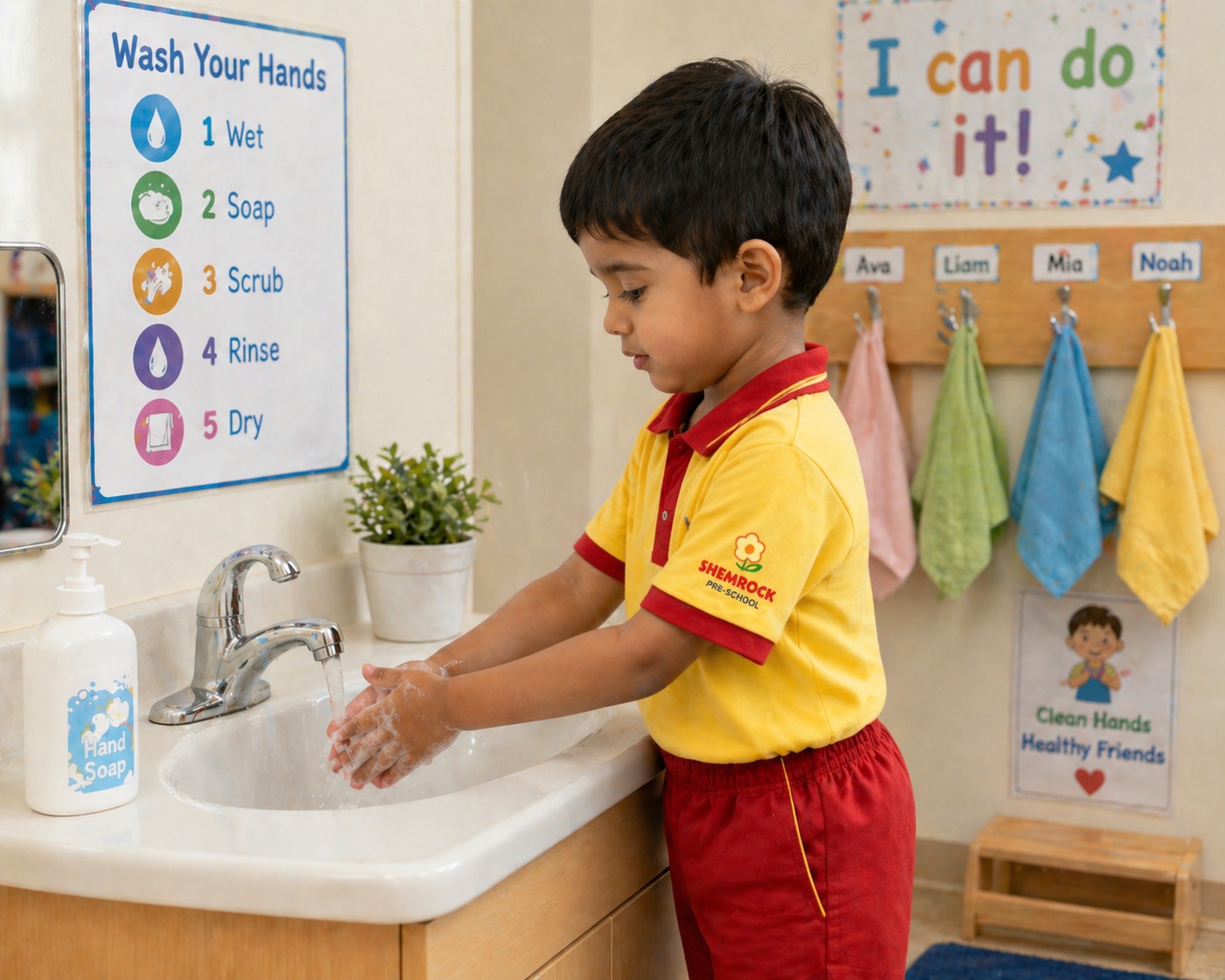
- Washing hands with minimal assistance
- Carrying their own small bag
None of these need to be mastered. Developing independence — the effort and intention to try — is the signal, not the result.
3. The Readiness Scorecard
Rate your child honestly. Award 1 point for each sign they show consistently, more days than not.
| # | Sign | Your Score |
|---|---|---|
| 1 | Settles within 20 minutes of separation | /1 |
| 2 | Shows interest in other children | /1 |
| 3 | Can communicate basic needs | /1 |
| 4 | Follows simple instructions | /1 |
| 5 | Shows curiosity and explores | /1 |
| 6 | Has a basic daily routine | /1 |
| 7 | Does small tasks independently | /1 |
| Total | /7 | |
What your score means:
| Score | Meaning | Recommended action |
|---|---|---|
| 6–7 | Strong readiness | Enrol in Nursery or Pre-Nursery |
| 4–5 | Ready | Start with Playgroup programme |
| 2–3 | Partial readiness | Gradual start — visit school first |
| 0–1 | More time may help | Speak with a child development expert |
Most children score 4–5 on first assessment — and adjust very well to preschool with the right support.
4. Five Readiness Myths — Stop Waiting for These
These are the most common reasons parents delay preschool enrolment in India — and why none of them should hold you back.
Toilet training is not a requirement at most Indian preschools, especially at the Playgroup level. SHEMROCK Heritage actively supports children through toilet training as part of daily care. You can confirm specific requirements on our admissions page.
Teaching the alphabet and numbers is literally what preschool is for. A child who already knows these things has less to gain from the early academic experience. Preschool is not about what a child already knows — it is about building curiosity, social skills, and foundational thinking patterns.
Shyness is a temperament, not a developmental delay. Research in early childhood education consistently shows that structured, nurturing preschool environments are among the most effective settings for shy children to build social confidence — precisely because the environment is safe, predictable, and guided by trained educators.
A two-year-old has no mental model of what school is. Expecting excitement before their first experience is like expecting a child to be excited about a food they have never tasted. Curiosity and openness are what you are looking for — not enthusiasm about an abstract concept.
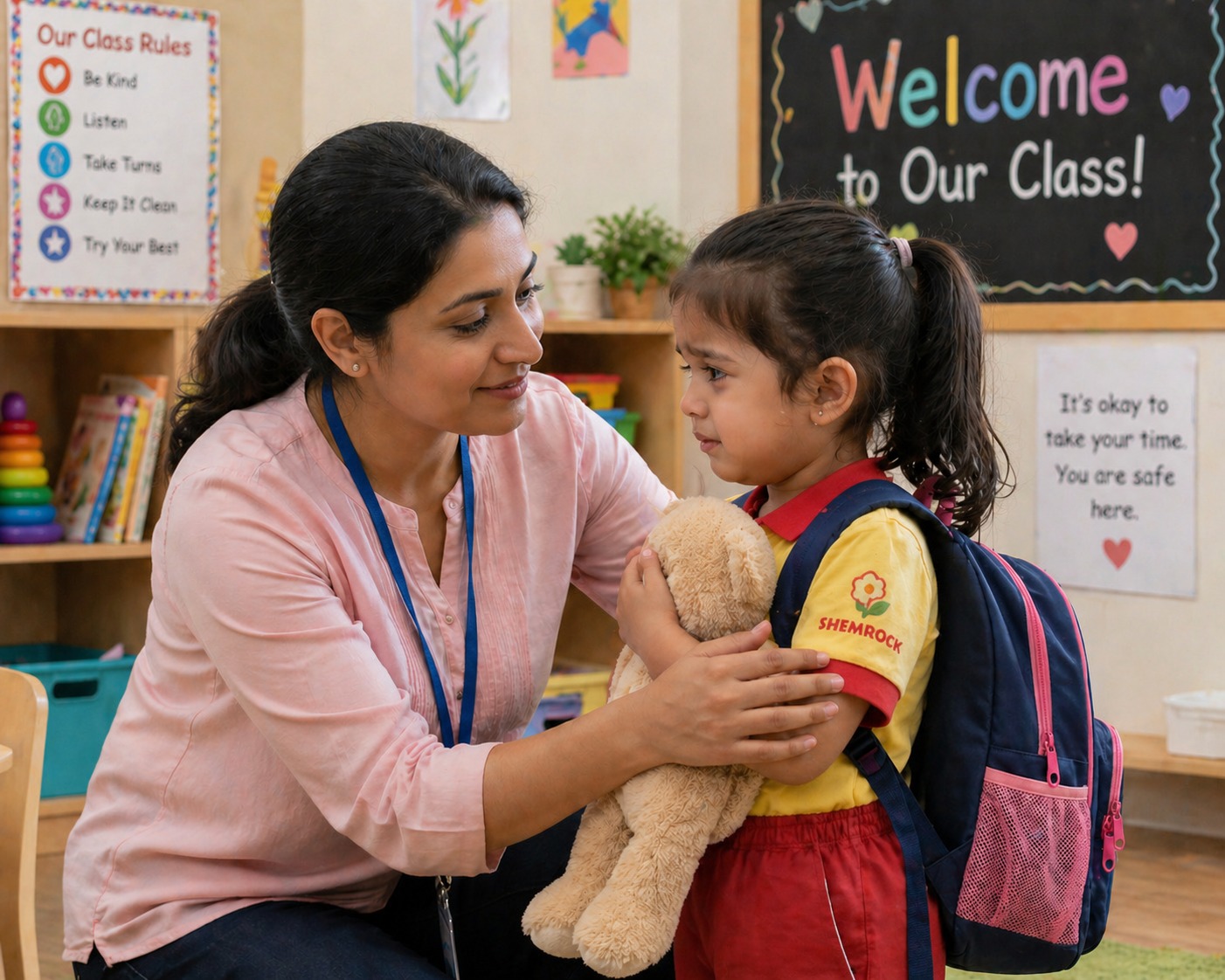
Even children who are absolutely ready for preschool cry at drop-off — sometimes for weeks. Crying at separation is a sign of healthy attachment to caregivers, not a sign of unreadiness. The relevant question is always: do they settle and engage once you have left?
5. Signs Your Child May Need a Little More Time
While most children are ready between 2 and 3 years, some may benefit from a more gradual approach. Watch for:
- Extreme and prolonged separation distress — inconsolable for the majority of the school day, consistently, over several weeks
- No verbal communication at all by 2.5 years — if your child has not developed any words or gestures, a developmental assessment is worth pursuing before starting preschool
- Strong discomfort being near other children — not just shyness, but consistent distress or withdrawal
- Significant recent disruption at home — a new sibling, a house move, a family illness — sometimes waiting 4 to 6 weeks is simply good timing
Important: None of these mean “do not send to preschool.” They mean “choose the right programme level and the right environment.” Speaking directly with our admissions team at SHEMROCK Heritage can help you decide the best approach for your child.
6. The Truth About Waiting Too Long
Many parents delay preschool with the belief that their child “isn’t ready yet.” In most cases, this reasoning contains a fundamental misunderstanding:
The social development, language acceleration, emotional regulation, and independence that come from a high-quality preschool environment cannot be replicated at home — not because home is inadequate, but because peer interaction at scale requires peers.
A 2020 review of early childhood development research published in The Lancet found that quality early education before age 3 has measurable positive effects on cognitive and social outcomes that persist into primary school and beyond.
Waiting too long — particularly past age 3 without any group learning experience — can delay the development of skills that preschool builds naturally and efficiently.
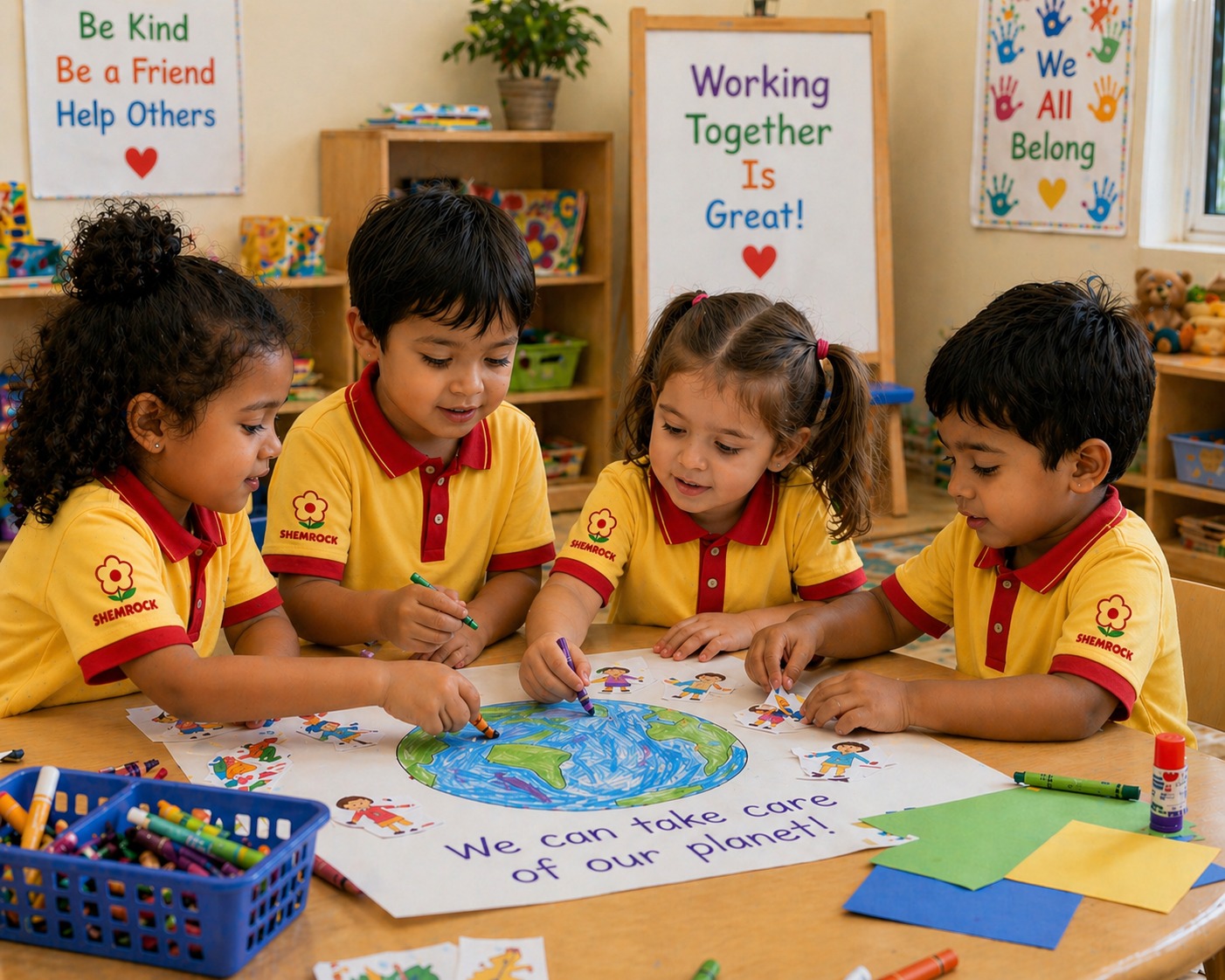
Play-based learning is not free play. It is a structured, teacher-guided approach where children build language, confidence, self-regulation, social skills and problem-solving through meaningful activities.
Look for children exploring different activities, teachers asking open-ended questions, purposeful classroom noise, movement, stories, blocks, art, puzzles and peer interaction.
7. How SHEMROCK Heritage Supports Preschool Readiness
At SHEMROCK Heritage, Rohini, the goal is never to test whether a child is ready — it is to meet each child where they are and build from there.
Our approach includes:
A gradual settling-in process. New children are not expected to hit the ground running. Our settling-in programme eases the transition over the first 1 to 2 weeks, with parents welcome to stay nearby during the initial days.
Play-based learning. Every activity in our programme — from art and music to outdoor play and storytelling — is grounded in child development research. Learning happens through doing, not instruction. Read more about play-based learning approach here.
Low child-to-teacher ratios. Individual attention is not a bonus at SHEMROCK Heritage — it is a structural feature of how we operate. Children with partial readiness receive the extra support they need without being separated from their peers.
Safe, stimulating spaces. Our campus facilities in Rohini are designed specifically for children aged 2 to 6 — with child-safe furniture, activity zones, and sensory spaces that make the transition from home feel natural.
Regular parent communication. Through our Synergy Programme, parents receive updates, photos, and regular progress conversations so that home and school can work together from day one.
We have been nurturing children in Rohini since 2005 — as part of the SHEMROCK Group, India’s first preschool chain, established in 1989.
What to Do If Your Child Shows 4 or More Signs
If your child scores 4 or higher on the readiness scorecard, here is a clear next step:
- Visit the school — seeing the environment in person resolves more doubt than any article can
- Talk to our educators — they assess readiness in real children every day and can give you an honest, personalised view
- Start the admissions process — for the 2026–27 academic session, admissions are currently open
Readiness becomes clear in real-life settings. A school visit is almost always the moment that doubt disappears.
Further Reading
- Why Play-Based Learning Is the Future of Early Education
- 10 Engaging Preschool Activities in Rohini That Support Early Learning
- SHEMROCK Heritage Admissions 2026-27
- Book a Campus Visit
Frequently Asked Questions
Book a School Visit at SHEMROCK Heritage, Rohini
Speak with our admissions team and understand the right programme level for your child.